Who is Banksy?
Banksy is one of the most mysterious and influential street artists of our time. His true identity remains unknown, yet his work—marked by sharp social criticism, political messages, and a rebellious spirit—has earned him worldwide fame. Emerging from UK Bristol’s underground graffiti scene, Banksy has evolved from a street artist into a cultural icon whose works now sell for millions of dollars. Despite this, he maintains a strong anti-capitalist stance.
Banksy’s artistic expression is characterized by stencil techniques, dark humor, and provocative themes. His works focus on topics such as war, surveillance, consumerism, and state oppression. His pieces often appear overnight in unexpected locations, and sometimes even find their way into major museums without permission. His anonymity has made him a legend, reinforcing his anti-establishment image.
Banksy, Counterculture, and Rebellion
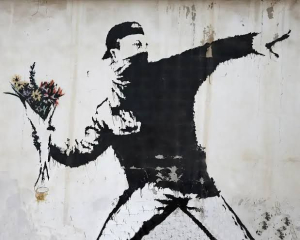 (Rebellion meets Art: Banksy)
Banksy’s work embodies the spirit of counterculture, much like punk rock and past resistance movements. At its core, his art questions authority, dismantles the status quo, and gives a voice to the unheard—values deeply rooted in rock and punk culture.
His artistic style is raw and direct, much like the DIY ethos of punk bands that rejected the mainstream music industry to create their own sound. While bands like The Sex Pistols, The Clash, and Dead Kennedys delivered provocative messages through music, Banksy critiques oppressive systems and institutions using visual art, turning walls and public spaces into his canvas.

(Pionners of Punk Rock – The Sex Pistols)
Banksy’s Connection to Rock ‘n’ Roll
Banksy shares strong ties with the rock ‘n’ roll world. One of the most famous examples of this is his collaboration with Blur in 2003, when he designed the album cover for Think Tank. The artwork visually captured the album’s themes of war, alienation, and political unrest.

(Blur Think Tank album cover by Banksy- 2003)
Although Banksy usually avoids commercial projects, he later defended his decision to work on the album cover, stating:
“I did a few things to pay the bills, and the Blur album was one of them. It was a really good album, and the fee was quite high. I think the key is making the right distinction: if you truly believe in something, just because it’s commercial doesn’t make it worthless. Otherwise, you’d have to be a complete socialist rejecting all capitalism. Even though combining quality music with quality visuals might seem contradictory, in the case of Blur’s album, it was a harmonious process.”
Banksy’s visual style also closely resembles the aesthetics of punk and grunge. The urban imagery, anti-authoritarian slogans, and political messages seen on album covers of bands like The Ramones, Nirvana, and The Clash are reflected in his artwork. His depictions of war and rebellion align with the themes tackled by punk and protest music since the 1970s.
Banksy and Rock Music as Symbols of Resistance
Both Banksy’s art and rock music serve as powerful tools of rebellion and dissent. Throughout history, rock and punk bands have questioned authority, spoken out against injustice, and fueled social change. Similarly, Banksy uses public art as a form of protest.
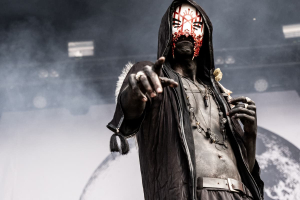
(Mysterious persona of Sleep Token, the rising star of modern metal music)
His mysterious persona and unexpected artistic interventions mirror the enigmatic identities cultivated by legendary rock musicians. Much like David Bowie’s ever-changing alter egos or Daft Punk’s masked anonymity, Banksy’s refusal to step into the spotlight emphasizes that art, like music, should be the main focus. This theme is also seen in contemporary masked bands like Sleep Token and Ghost in the metal scene.
The Sotheby’s Shredding: A Protest Against the Art Market
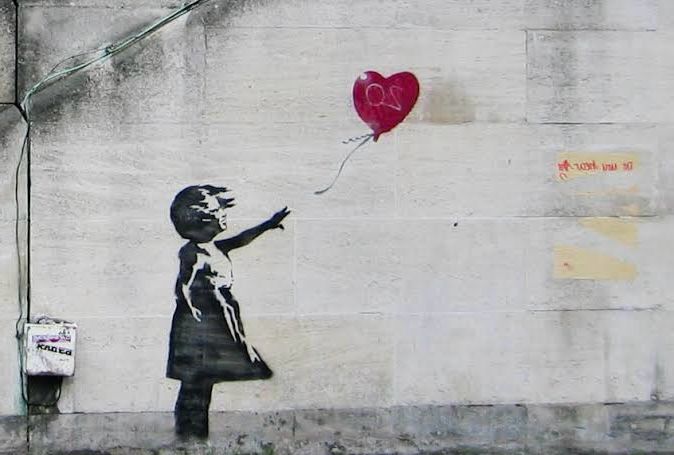
One of the most unforgettable moments in Banksy’s career occurred at Sotheby’s auction house in 2018. His famous piece Girl With Balloon sold for £1.04 million ($1.4 million). However, the moment the auction ended, a hidden mechanism within the frame shredded the artwork before the stunned audience.
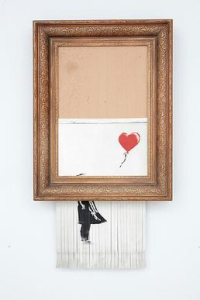
(Love is in the Bin by Banksy)
Renamed “Love is in the Bin”, the shredded piece later sold for £18.5 million ($25.4 million) in 2021, making it one of Banksy’s most expensive works. This act was a direct critique of the commercialization of art, yet ironically, it increased the artwork’s value even further—perfectly illustrating the contradictions of the art market that Banksy mocks.
Banksy’s Recent Works: On Animals and the Environment
Banksy’s latest pieces focus on issues of animal rights and environmental destruction. His recent murals depict caged and suffering animals, drawing attention to deforestation, industrial farming, and climate change. These themes parallel the ethical and environmental concerns often addressed in punk and protest music.

From rebellious street graffiti to works that shake societal norms, Banksy continues to be a voice for the oppressed—much like the greatest rock and punk musicians who have challenged social issues through their music.
Final Words: Banksy, the Rock Star of the Art World
Banksy is more than just a street artist; he is a cultural icon, a provocateur, and a revolutionary figure. His work extends beyond graffiti—it is a form of artistic protest. Just as rock and punk movements have carried the spirit of rebellion for decades, Banksy’s art embodies the same defiant energy.
The rock bands mentioned in this article used music to challenge authority, while Banksy does it through visual art. Like punk and rock album covers, his murals are raw, unfiltered, and rebellious—anti-authoritarian, bold, and loud. Whether in music or art, these figures fight against war, capitalism’s exploitation, and social injustice, using their platforms to send powerful messages.
As long as oppression, inequality, and censorship exist, Banksy’s art—like rock and metal music—will remain relevant and impactful. Whether on the walls of war-torn cities or in underground music scenes, Banksy is the rock star with a paintbrush.

(Bleeding Madonna and Child. This mural art by Banksy is about the atrocities in Palestine. The work is centered around a rusty pipe reflecting a bullet wound. Location unknown.)
All rights reserved. Quotations without reference is forbidden.
(All photo and visual copyrights belong to copyright owners)