
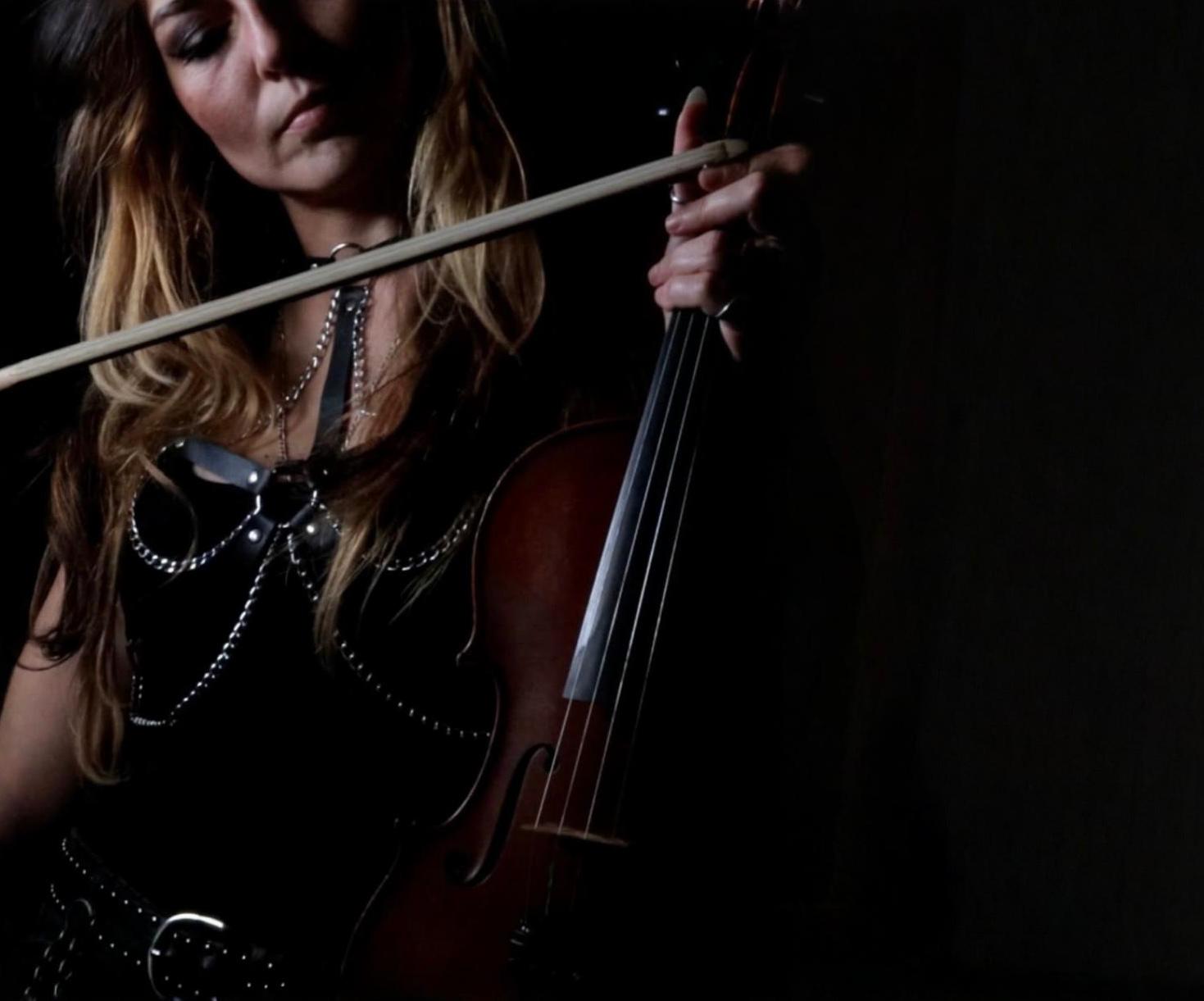
From the Shadow of the Violin to the Darkness of Carmilla: Esin Yardımlı Alves Pereira
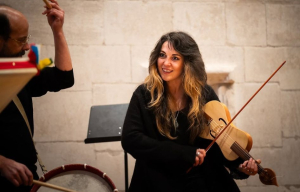
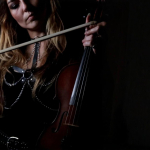
After years of creating Celtic and Nordic folk albums, orchestral compositions for role-playing enthusiasts, and opening a gateway to medieval and Renaissance melodies through The Wandering Bard, Esin Yardımlı Alves Pereira now places her violin at the very heart of heavy metal. KIANIS – Homage to Carmilla is a dark and passionate encounter in which an overlooked female vampire finds her voice again through an instrument that has often been overlooked itself.
There has always been a desire for world-building at the core of Esin Yardımlı Alves Pereira’s music. Sometimes she wanders through the pages of a medieval song, sometimes along the mist-covered paths of Celtic and Nordic melodies, and sometimes she creates vast orchestral landscapes for role-playing worlds. Through The Wandering Bard, she follows the traces of historical instruments and ancient melodies, carrying a timeless emotion to modern listeners: the need to tell stories.
KIANIS – Homage to Carmilla opens one of the darkest doors of that journey. Inspired by Joseph Sheridan Le Fanu’s Gothic vampire novella Carmilla, written decades before Dracula, the EP is more than a literary tribute. It is also a statement of artistic identity. The violin becomes the protagonist of the story. Just as Carmilla has long remained in Dracula’s shadow, the violin has often been underestimated within the world of metal. With this release, Esin brings both of those overlooked voices into the spotlight.
Despite its concise twelve-minute runtime, Homage to Carmilla unfolds with a dense, theatrical atmosphere tinged in shades of deep crimson. In Esin’s world, medieval music, Gothic literature, and extreme metal become three different languages orbiting the same dark altar. We spoke with Esin Yardımlı Alves Pereira about her long-hidden metal vein, Carmilla’s enduring shadow, the creation of this new dark universe built around the violin, and the many facets of her musical identity.
For years, you’ve been producing Celtic and Nordic folk albums, orchestral compositions for RPG players, and medieval melodies. Do you think your heavy metal side was always a vein running through you?
Absolutely! My relationship with metal goes way back. It took me a while to bring it to the surface, but I always say, all in good time. Joining as a guest violinist to other metal bands was and still is a dream of mine, but I didn’t have a recorded example that could show exactly what I was capable of, what I was talking about. I played in quite a few bands, though, you know how it goes, they didn’t work out. And maybe that was for the best, because no music I had played until now felt as authentic as KIANIS – Homage to Carmilla. Taking all responsibilities onto myself, from the concept to the composition of the EP, really allowed me to let out what was in me. And by the way, we owe the EP’s incredible sound to Metehan Köktürk, I have to add that right away!
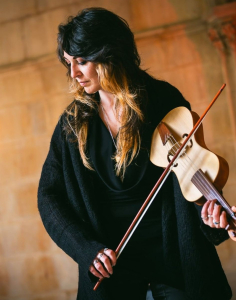
As for that metal vein, there’s this passage in my first novel, Kitap Kahramanı, which I wrote when I was 11-12, (got published by An Yayıncılık when I was 13, the editor of the publishing house had read the first chapter on a forum and asked for the rest, an internet miracle!), and that passage, in many ways, says it all.”. (At this point in the book, the three main characters, together with a book character who has come out of an unfinished novel, go to a shopping “passage”, which served as the epicenter of Istanbul’s metal scene in the 1990s, to look for a second-hand bookshop in search of Michael Ende’s The Neverending Story, hoping to enter the fiction of the book.)
“…We had arrived at Akmar Pasajı. We made our way toward the stairs, passing through a group of metalheads standing there like question marks, smoking. Although I never understood why they hung around there like that, I had always sympathized with them… They had built their own world in this passage and wandered around inside it. It seemed to me as though they had taken the parts of the real world’s harshness that appealed to them and gathered them there.”
Less than a year after writing this, I was memorizing and translating Metallica and Rammstein lyrics, blasting Moonspell at home when alone, screaming “MEEEEPHISTOOOOO!!!!” 🙂 In the years after the book came out, I was so embarrassed by that passage, so embarrassed! Adolescence, obviously. Now I ADORE it.
How did the idea for KIANIS – Homage to Carmilla first come about? Was this a project you had been carrying inside you and shaping for a long time?
How did it come about… Creativity can arrive in many forms. Sometimes an “ending” comes to mind first; sometimes it’s a passage from somewhere in the middle. KIANIS – Homage to Carmilla was born from left to right. The first sketch already was the whole piece of music. But yes, that candle, that flame, had been burning inside me for years. Something had to come out. Something had to be heard in the most “me” way possible. All in good time. It took exactly the time I needed to gather my courage. This music couldn’t have come out earlier or later. With the volumes of The Songbook of Tchinar, for example, I got used to being my own orchestra. Once many pieces like that fell into place, the project finished itself.
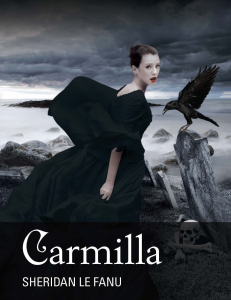
“The fact that Carmilla never reached Dracula’s level of fame feels to me like one of the strongest literary reflections of a much larger social inequality.” Esin Yardımlı Alves Pereira
Carmilla, a female vampire and one of the pioneers of Gothic vampire literature, predates Dracula, yet today she remains in Dracula’s shadow, while Dracula has almost become a commodity. Why did that affect you so deeply?
How could it not? It’s a fantastic book! Characters so alive they come out of the pages! A short but incredibly full story. And by the literary standards of its time, it’s highly masterful. Impossible not to ask “why”? 🙂 But the fact that Carmilla never reached Dracula’s level of fame feels to me like one of the strongest literary reflections of a much larger social inequality.
This is not widely known, but for example, for a long time in medieval Europe, women had the right to own businesses and enterprises, and in that sense they were in a stronger position than women of the centuries that followed. So it is difficult to simply say, “yesterday was bad, today is better.” The fact that Carmilla was written before Dracula, yet did not become canonized or widely known, is not the first case and won’t be the last. On top of that, Carmilla being lesbian intensifies the issue further. I’m loaded a plenty regarding Victorian and post-Victorian censorship culture, better not diving into that here, but Carmilla is definitely one of the strongest figures that embodies this whole subject too. Meanwhile, the relationship between Gothic culture and heavy metal cannot be measured in mere years, so the bond between her and the music formed immediately, without question. And the more she is spoken about, the more artistic works are created around her, the better.
In this EP, the violin functions almost like a voice. What was it like for you to turn the violin from an “accompanying” instrument into the main character telling the story? How did you decide on the violin and its sound in KIANIS – Homage to Carmilla?
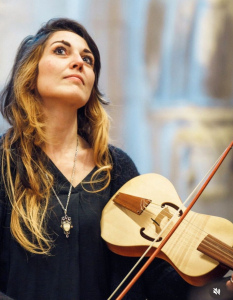
To be honest, just as Carmilla has been overshadowed, the violin is also underestimated in metal, so I thought I’d solve both issues at once. I didn’t think twice about putting the violin at the center of the music, and I didn’t have to play the recording four times either; what’s in my mind is under my fingers. The violin has an enormous emotional and timbral range, and both Carmilla and heavy metal have this inviting but unsettling sound, predatory and enchanting, dangerous and painful too. The violin is an absolutely amazing choice for reflecting all that.
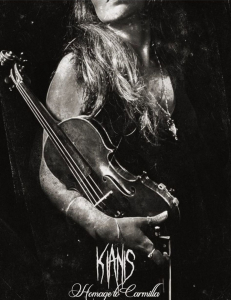
And I’m not saying this just bacause it’s my own instrument, I was five when they put it in my hands without asking my opinion. When I was 12, I read that Yann Tiersen had also started violin early, then broke his violin at 13 and bought an electric guitar. I wanted to quit too, but with no parents around (one we fled from, the other dumped us), my brothers insisted that I continue at the conservatory, thinking in their own way that I’d end up with a decent profession. Even then I was a talent scholarship student and until the end of university my relationship with the violin remained quite financial. But did I not meet wonderful teachers along the way? Was I not enchanted? Did I not secretly jump into every metal project I could? Of course I did. So today, it’s become one of the mediums through which I can express myself most freely.
“Just as Carmilla has been overshadowed, the violin is also underestimated in metal.” Esin
How did years of working with historical instruments and medieval music contribute to building the Gothic atmosphere of this EP?
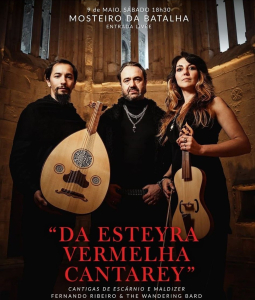
When the two subjects are this symbiotically connected, it’s a little difficult for me to measure which one contributed to which! Conceptually, even though they may seem quite separate, “Gothic,” which has survived ondulatingly through centuries, somehow unites folk from very different periods n very different mentalities. I think the root of that lies in the tremendous importance given to emotional worlds and imagination. Fernando Ribeiro once said about the concerts he does with us, The Wandering Bard’s “Da Esteyra Vermelha Cantarey” program: “It is very different from what I do with Moonspell, but it is connected somewhere.” Difficult to explain. 🙂
“To me, when music and literature come from a place that surrenders to time, an indescribable color is added to the taste of the final work. Anyone who, at some point in their life, had tried finger-counting how many times does Opeth repeat a riff will understand what I mean.” Esin
KIANIS lasts only 12 minutes, but like Sheridan Le Fanu’s Gothic novella, it carries a very dense and dramatic flow. Was building a short but striking form a conscious choice while musically interpreting Carmilla’s story?
Thank you 🙂 and yes, absolutely. To me, when music and literature come from a place that surrenders to time, an indescribable color is added to the taste of the final work. When I say music surrendering to time, I’m not only talking about the bpm, anyone who, at some point in their life, had tried finger-counting how many times does Opeth repeat a riff will understand what I mean. In the same way, some fictions are born to be short stories, while others are born to be three-volume novel series and giving them fewer or more pages than they want puts the fiction at risk. Carmilla is a novella; writing a full album for it would’ve been too much, and making a three-and-a-half-minute track would’ve been too little. On the other hand, stylistically speaking, both the writers and readers of that period “had time.” Details are not skipped, feelings unfold in wide, generous paragraphs, pasts are complete, dialogues are deep. From the beginning of the piece, my intention is to explain this whole matter to the listener, (for example, who would release a genuinely slow-developing two-minute intro in 2025, 2026, right? while people swipe through life like it’s a phone screen, at the speed of a squirrel), but it is a piece that takes shape “within time”; that is its very texture.
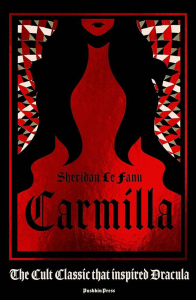
I received some beautiful comments. I’ve had a lot of folk tell me “dark red, burgundy.” I’ve heard “it has the consistency of a melting candle wax,” and “like a heavy velvet curtain,” about the density of the piece. All these textures are the result of those 12 minutes. And I also have heard from many people who went and read the book because of this EP, I couldn’t be happier!
Did you form a personal connection with the strong, contradictory, and mysterious female figures in Carmilla?
Absolutely! Throughout history, in literature and folklore, it’s quite something, how strong women are usually depicted as witches (mystical/frightening), or monsters (terrifying/frightening), and often not even as human. For as long as I can remember, after people have observed me from afar for six-seven months, (for some reason apparently I have some sort of mystery about me), they come up to me in various ways and say, “You’re actually not that scary.” I’ve heard this so many times that it’s an inside joke among my close friends now. I don’t even have a poker face, in terms of seeming mysterious, but maybe it’s because when I’m left to myself, my mind is always seriously up in the air, tinkering with thoughts and things. Maybe that’s why.
And I’m strong. I became strong. I don’t enjoy having become strong. I wish none of us had to be strong. I wish we were not forced to use our strength. On the other hand, there are still many people who are used to perceiving strength as something frightening, and those folk, clearly, would never come near me even after years, good riddance. 🙂 Which of us is not contradictory?
“I’m strong. I became strong. I don’t enjoy having become strong.” Esin
As someone who has shared the stage with Fernando Ribeiro from Moonspell, how has your connection with the Gothic metal world affected your musical production over the years?
Sharing the stage with Fernando Ribeiro… Very few things in life are that pleasurable. Let me open that up a little. The focus of last year’s edition of CMML, the medieval music festival I co-direct with Ricardo Alves Pereira, (the guitars and bass on Homage to Carmilla are his, and they couldn’t have been this wonderful in anyone else’s hands; we produced the parts constantly asking ourselves, “Would Eric Draven play this on top of the building?”!) was secular songs. (What one considers secular and why is also a delicious subject for discussion). One song genre specific to Iberia is “cantigas de escárnio e maldizer,” which we could translate as “songs of scorn and mockery.” It connects with the people of today so much that it boggles my mind. Extremely intelligent; some pieces overflowing with irony, also very funny, very emotional, and some of it is incredibly foul-mouthed. Imagine someone living 800 years ago saying “go f. yourself”, same energy, and then weaving that kind of language into masterfully written poetry. At the same time, there’s an incredible freedom of speech: the troubadours attack pedophile clergymen, perverted doctors, hypocrisy, those in power while corrupted, with such force that the way it lands perfectly today, 800 years later, makes your heart ache. Ah, ah, an indescribable repertoire. And we believe that, in the world today, no one but Fernando Ribeiro can interpret these words with the care they so much deserve.
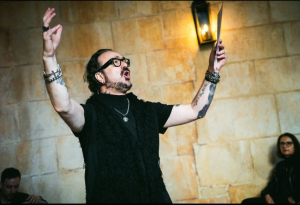
Fernando’s philosophical and literary background, his fiction writing, his poetry and lyric writing, and most importantly his curiosity and interest in life, history and the world, plus that deep, roaring voice we know so well from Moonspell, u see where I’m going with this? When it came to these poems, Ricardo and I didn’t even need to talk. We looked each other in the eye and said, “Yes.” Inviting Fernando Ribeiro to The Wandering Bard for this program was the only way to go. To our delight Fernando accepted, and sharing the stage with him is a very nourishing, completing experience. By the twentieth minute of the first rehearsal or so, the three of us had already agreed that this won’t be a one shot performance. Indeed, last month we performed for the second time “Da Esteyra Vermelha Cantarey” at Batalha Monastery, and this is only the beginning.
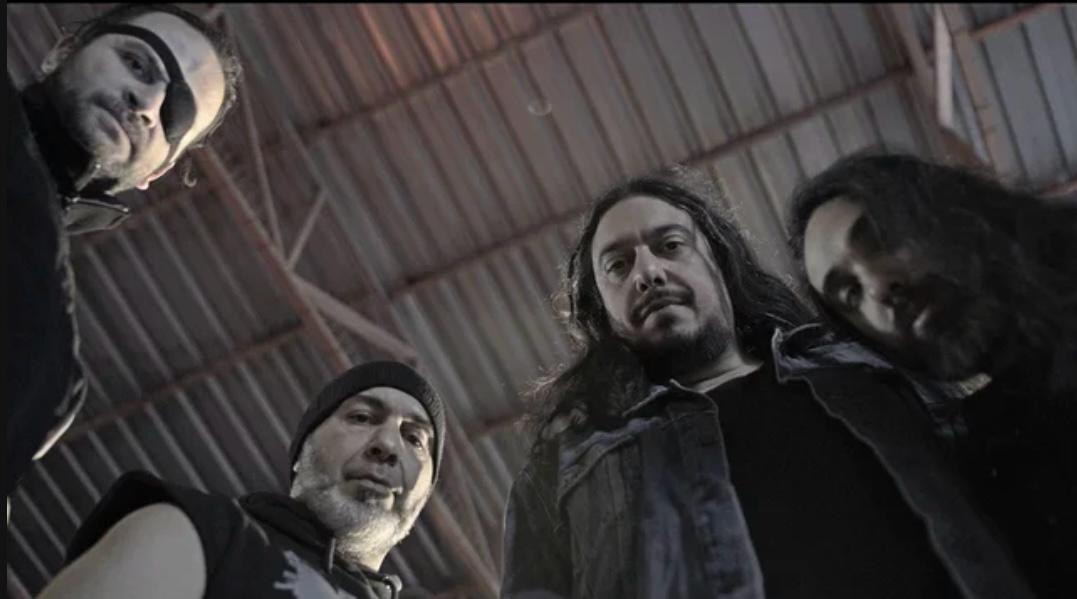
Having XI from the black/avant-garde metal band GAEREA on drums seriously strengthens the dark side of the EP. How did his involvement in the project happen?
Very organically! I explained the concept and asked whether it would interest him, sent the demo, and he said yes straight away. 🙂
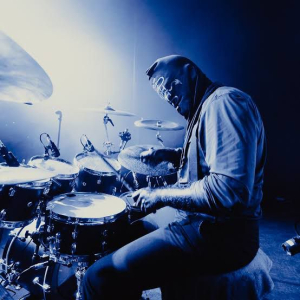
GAEREA is one of Portugal’s awesomest bands; I’d say no one should miss their concerts, their albums and their stage presence are two very distinct and special experiences. (And my other favorite band from around here is Okkultist btw, recommended to those who don’t know them.)
I had certain “certainties” in my head about the drum parts, but I also wanted XI’s artistic creativity to come through. When I’m invited to a project and someone tells me, “Interpret it however you want,” I don’t like that, I wanna know and see that the other side has a clear vision in their mind. Serving that vision and adding a piece of myself on top of that feels both more interesting and more unifying to me. XI is that kinda person, a very good musician and listener, so the recording truly reflects both my dream and his extraordinary sound and creativity.
“My aim is not to reclaim my unrecorded past, but to claim it for the first time.” Esin
In your interviews, you say, “I’m tired of saying ‘I used to play metal.’” Is this EP also a story of reclaiming your musical identity?
I’ll connect this to the bigger picture: The Wandering Bard is my shared success with Ricardo Alves Pereira in medieval and Renaissance music. It has a very contrasting fan base, +30K listeners a month, which is genuinely no joke for such a niche music. In a sweet way, our music brings together RPG players and serious early music enthusiasts, and we know it’s very important for the sound we have created to remain within this delicate balance. That’s why maintaining The Wandering Bard’s line is a “responsibility” we truly love.
On the other hand, lines are difficult as I’m a multidisciplinary, multigenre artist. One of my heroes is Sting, and the fact that he gathers his John Dowland album, Peter and the Wolf, The Last Ship, and all his other kinds of music under his own name has played a major role in that. People, including classical music radio presenters and the likes, can tell me openly or indirectly: “If you play in many styles, that means you are not fully focused on any of them.” But it’s exactly the opposite. For me the issue is not “scattering into many styles,” but approaching each style through its own language, roots, and seriousness. My solo profile, (my name is long but I cannot leave any part of it out), “Esin Yardimli Alves Pereira,” is a stance against a view that underestimates versatility, and my aim is not to reclaim my unrecorded past, but to claim it for the first time.
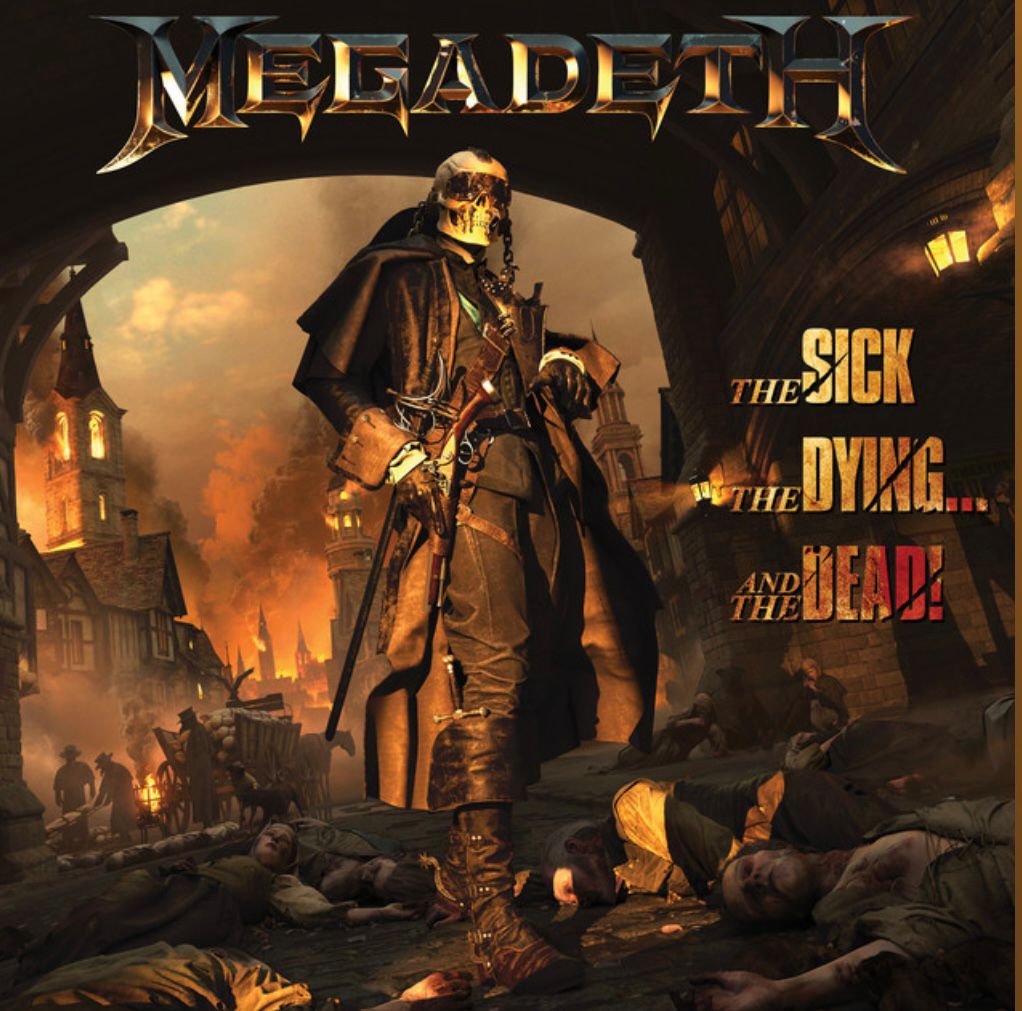
And yes, I was really tired of telling folk “I used to play metal too,” and of seeing that unconvinced look in their eyes… I still couldn’t encounter the violin I’ve in mind in heavy metal, apart from Megadeth’s “Insomnia”, and I felt a responsibility to alter the fact that when people think of violin and heavy metal, the first ideas that come to mind are playing few bars of a sad melody with elegant sways, or placing jolly folk melodies over some heavy guitar riffs. Now I’m at peace with it. When people hear just a few seconds of my music, their eyes widen, they react with some variation of ‘holy sh*t’ in their own language, and that usually settles the matter.. Being able to put my identity forward in this way also calms me down. At the end of the day, don’t we all want to be understood? 🙂
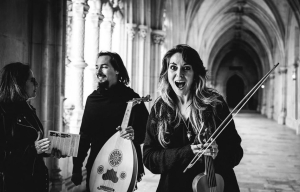
“If a new band inspired by Symphony X does not listen to Black Sabbath, Holst, or Stravinsky, does not read Milton or Homer, then without touching the veins of art that fed Symphony X, they risk simply sounding like imitation.” Esin
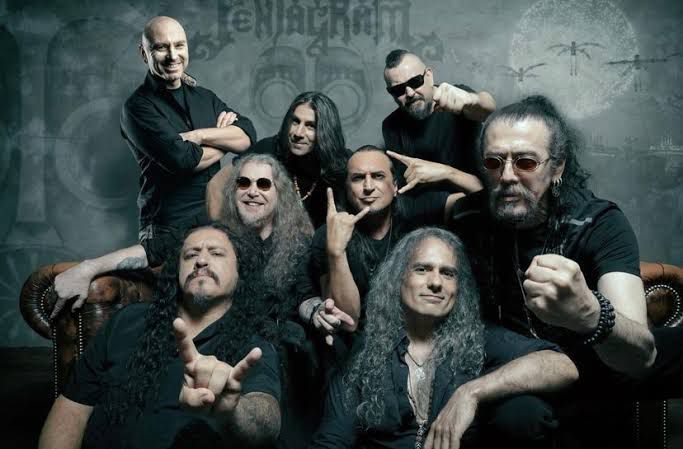
Among your inspirations within the genre are Opeth, Dimmu Borgir, Septicflesh, Moonspell, and Symphony X. What are the biggest marks these bands left on you?
Their courage. Their searching. Their evolutions. Their roots. Their curiosity. Their own sources of inspiration.
“Their own sources of inspiration” is a very important subject, by the way. Going back to the sources of the bands that have contributed to me through inspiration is a critical and nourishing process for me. When I try to discover new bands, I also find myself complaining, frankly, about those who skip this process. For example, if a new band inspired by Symphony X does not listen to Black Sabbath, Holst, or Stravinsky, does not read Milton or Homer, then without touching the veins of art that fed Symphony X, without experiencing anything of that process of inspiration, they risk simply sounding like imitation. It shows, from the lyrics to the orchestration. This kinda “second-degree inspiration” has become very widespread in the metal scene, as in other fields, but I’m hopeful that it’ll improve eventually.
One of the most interesting aspects of your music is its ability to draw the listener into a powerful atmosphere. While composing Homage to Carmilla, were you trying to capture the Gothic atmosphere of the story, the spirit of Carmilla as a character, or an entirely different abstract emotion beyond both?
Thank you, and that is a truly beautiful question. I’m going to write a scene that’s not in the book. A mountain, a mountain with the flavor of the mountain in Mussorgsky’s Night on Bald Mountain sequence from the 1940 film Fantasia, with a castle on top, a castle both sharp and solid. A very blue-black scene, but with reds also in the foreground, that blood-sunset is still lingering on the horizon. It’s as if I’m in a car, as if that car is red. I’m approaching that mountain, both desiring and fearing.
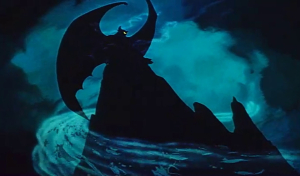
In that castle, Carmilla is “waiting,” with her manner, her enchantment creeping to your insides, tightening your breath, gently making your knees and ribcage tremble. She doesn’t know who I am. Obviously, what I’m writing has nothing to do with the book. In a way, the starting point of Homage to Carmilla began with me imagining my encounter with Carmilla, or being about to encounter her. Knowing who she is in the book, but stepping outside what is written in the book. That was my initial feeling; and later on during the production, I was closer to the Carmilla in the book.
“Musically, both medieval music and metal are genres that feed from literature and also feed literature. Thinking about literature’s relationship with both of them warms my heart.” Esin
Medieval music, Gothic literature, and extreme metal seem from the outside like distant worlds. Where do you find the common spirit of these three areas? Musically, how do you connect them to each other?
Honesty. Respect for emotion. Expression. Accepting darkness. The need to tell stories. Imagination.
Every cultural movement places emotion on an altar one way or another. In Romantic literature, in Baroque opera, in the family film where the dog survives, emotion is important, that’s clear. But each places emotion on a different altar. In Gothic and heavy metal, and by Gothic I mean period music, architectural style, modern music and cinema, literature included, it feels as if the altar on which they place emotion is the same or very similar to the one of heavy metal.
Musically, both medieval music and metal are genres that feed from literature and also feed literature. Thinking about literature’s relationship with both of them warms my heart.
What is the connection between what you feel while playing medieval and Renaissance melodies with The Wandering Bard and what you feel while producing heavy metal?
The search for authenticity. The responsibility to make the audience/listener feel emotion. And emotionally, both are quite direct; they don’t hide stuff, nor hide themselves.
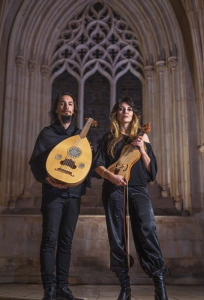
In terms of muscle and brain power, the emotional and physical gymnastics required in the playing of Homage to Carmilla, (as the performance video shows), may seem incomparable to my interpretations on The Wandering Bard recordings. But both demand the same amount of focus, technique, attention, and love from me. Interpreting a difficult melody is hard work. Interpreting an easy melody is sometimes even harder work. In any case, making hard work look easy is hard work, but as performing artists, that’s our job.
Is KIANIS – Homage to Carmilla a beginning for you? Will there soon be new and surprisingly different projects from Esin Yardımlı Alves Pereira?
Homage to Carmilla is definitely a beginning for KIANIS. But I’ll speak openly: at the beginning of the year, we went through a very serious storm in Portugal. Road signs across an area the size of Ankara were flattened to the ground, forests collapsed. Neither people nor fauna-flora were ready. Nature seemed to wink and say, “Don’t forget what can I do.” The 30-day program of the medieval music festival Ricardo and I co-direct got canceled because the castle suffered serious damage, other concerts are also postponed because of storm damage. So our plans have been shaken up quite a bit.
But we are phoenixes, all’s well that ends well. There are many plans, many desires. There is a lot of music written and waiting. I can say this for certain: The Wandering Bard will surprise its listeners this year. Let’s just say there are pieces on the next album where I have no instrument in my hands; you will hear me that way too. 😉
Also, I’m here, ready, available. Any metal band that wants my violin and my orchestra in their music can knock on my door. You can find more information about me at CordaSonora.com.
Interview by Mine Gürevin
Edited and Prepared for Publication by Güzin Paksoylu
All rights reserved. Quotations without reference is forbidden.



Leave a Reply
Want to join the discussion?Feel free to contribute!