Few musicians in rock history have treated sound as something truly alive quite like Adrian Belew.
Whether alongside King Crimson, David Bowie, Talking Heads or Frank Zappa, Belew has always approached music with the mindset of an explorer — chasing strange textures, bending technology into emotion and constantly pushing beyond familiar territory. Especially during King Crimson’s groundbreaking 1980s era, he helped reshape progressive music into something futuristic, rhythmic and entirely unpredictable.
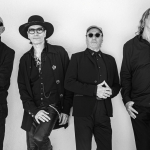
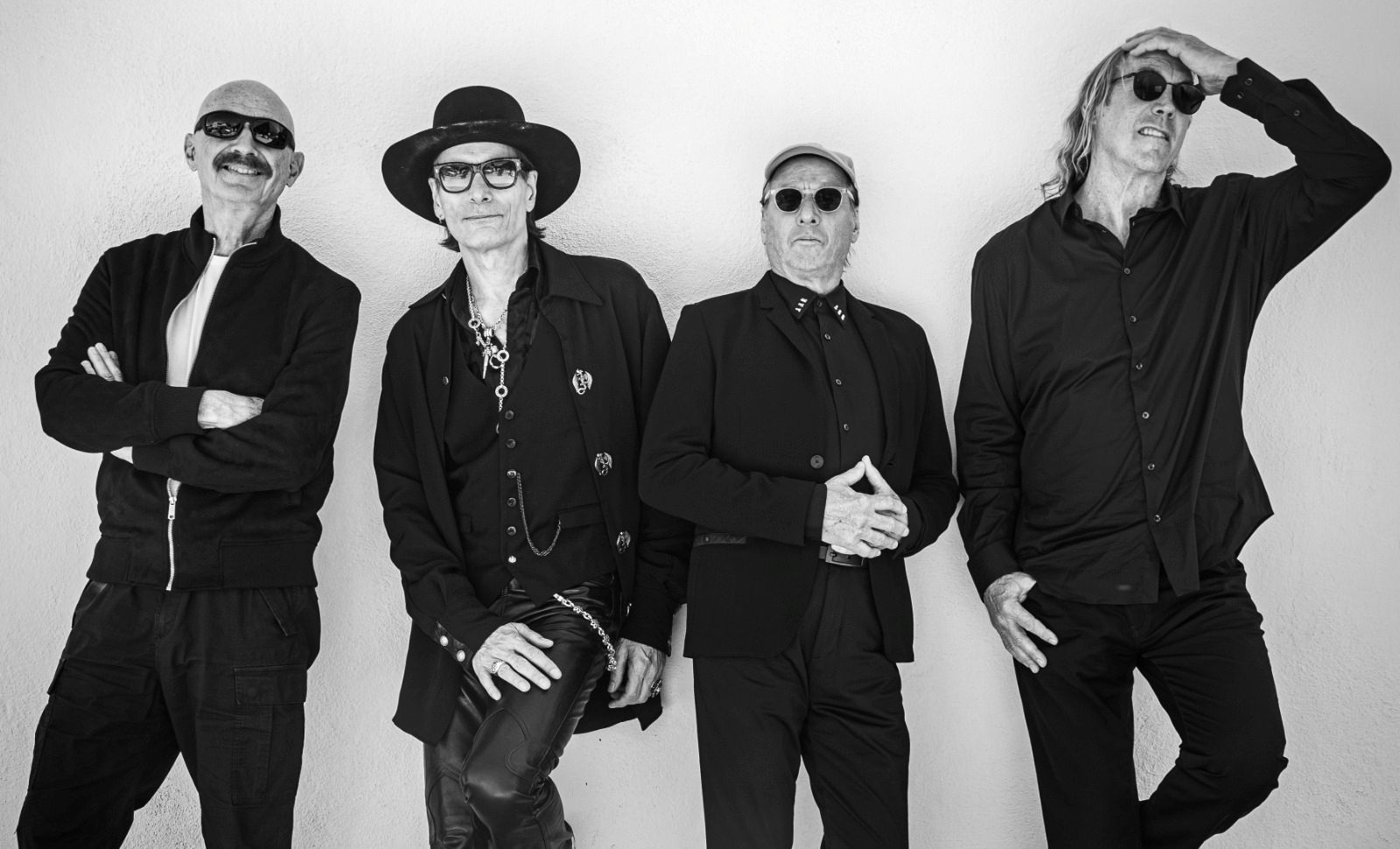
Now, with BEAT — alongside Steve Vai, Tony Levin and Danny Carey — Belew returns to the world of Discipline, Beat and Three of a Perfect Pair, not as a nostalgic act, but as a living continuation of that adventurous spirit.
In this conversation with Metal Oda, Adrian Belew reflects on the creative chaos of 1980s King Crimson, working with David Bowie, the influence of Beat Generation literature, artificial intelligence, creativity and progressive rock, and why curiosity still matters more than nostalgia.
Could you tell us the story behind how BEAT came together, especially with this line-up featuring Steve Vai, Tony Levin and Danny Carey?
When I realized that 2021 would mark the 40th anniversary of the 1980s King Crimson quartet and the music we created back then, I called Robert Fripp and suggested we celebrate it somehow. We talked for a while, and the next day he sent me a message explaining that his schedule for the coming years simply wouldn’t allow it. But he also told me: “If this is something you want to pursue, you have my blessing.”
At the time, I was working with a producer named Angelo, who had produced some of the David Bowie shows I’d done. We started discussing the possibility of bringing this music back to life, but the first major question was obvious: who could possibly take Robert’s role? Without the right guitarist, the project simply couldn’t happen.
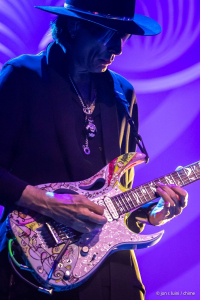
(Steve Vai with BEAT)
“But who could possibly take Robert’s role? I immediately thought of Steve Vai.”
I immediately thought of Steve Vai. Years earlier, I had read an interview where Steve talked about how deeply he loved those records, especially Robert’s playing. I called him, explained the idea, and he instantly said yes. He told me he had been looking for a real challenge, and this was exactly that.
Then COVID happened, which put everything on hold for more than two years. Once touring finally resumed, I called Steve again and asked if he was still interested. He said: “I’m even more excited now.”
For me, Tony Levin was essential from the very beginning because he was such an integral part of that sound. And Danny Carey was another musician I always wanted involved. I’ve known Danny for years — he even played on some of my solo records — and he always told me how much those albums had changed his life. His admiration for Bill Bruford made him the perfect choice.
The only difficulty was timing. Tony was touring with Peter Gabriel, Tool was busy, and we had to wait until everyone’s schedules aligned. But once it finally happened, it felt wonderful.
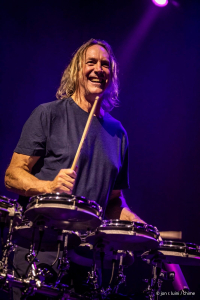
(Danny Carey with BEAT)
“Those three records changed my life. To me it’s timeless music.” — Adrian Belew
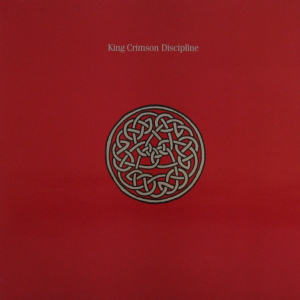
Was it that shared emotional connection to the Discipline, Beat and Three of a Perfect Pair era that brought the band together around these three iconic albums?
Absolutely. Those records changed my life.
When Robert first asked me to start a band with him and Bill Bruford, it wasn’t even called King Crimson yet. I had no idea what it would become. But essentially, Robert handed me the keys to everything I had been working toward my entire life. He wanted me to be the frontman, co-guitarist, songwriter and lyricist. It was an incredible opportunity — and also an enormous challenge.
That music still means a great deal to me. It means a lot to Tony as well, because he joined at the same time, and Steve and Danny were both deeply influenced by those records too. To me, it’s timeless music.
When King Crimson toured in recent years without me, the focus was mostly on the 1970s material. And honestly, I started feeling that if I didn’t do something, the music from the 1980s period might eventually be overlooked — maybe even forgotten.
That was very important to me. I wanted to bring this music back not only for the fans who experienced it back then, but especially for those who never had the chance to see it performed live.
The songs, lyrics and ideas created during that period are deeply personal to me. In many ways, they’re my children.
When people talk about King Crimson, many still immediately think of the 1970s era.
Some people do, yes. But many of my younger fans actually discovered King Crimson through Discipline. For them, that is King Crimson. They see me as the singer, songwriter and frontman of the band they grew up with.
I stayed with King Crimson for more than three decades, so the songs, lyrics and ideas created during that period came from me and they are deeply personal to me. In many ways, they’re my children.
“What I’ve always loved most is creating sounds people haven’t heard before.” — Adrian Belew
What was the biggest challenge in bringing the sound of the 1980s King Crimson into the present day?
For me, the biggest challenge was technology. In the 1980s, King Crimson had access to completely new tools that almost nobody else was using at the time. Robert and I both had guitar synthesizers, Bill Bruford was experimenting with electronic drums, and Tony Levin was playing the Chapman Stick — an instrument most people had never even seen before. All four of us were exploring new territory, and I think that’s a huge part of why the band sounded so unique.
To recreate that world today, I had to go backwards in time and rebuild much of that original setup. I still had some of the gear — the same amp, the same synthesizer, even one of the guitars I used with the synth system — but many of the pedals and components had disappeared over the years. I had to hunt them down one by one through phone calls and deep searches. I already used the modern system and we made that half of what I have; the other half is a separate and all vintage stuff. We eventually built an entirely new hybrid system around them.
Now during the shows, I switch between my modern setup and a separate vintage rig dedicated entirely to those classic sounds. I can move from the Parker Fly and contemporary textures to the old Twang Bar King guitar with the original pedals and synthesizer tones. It was important to me that the music genuinely felt like that era.
And honestly, technology has always been both a blessing and a challenge for me like a double-edged blade. It constantly changes, which means you’re always rebuilding your gear and trying to keep up. You can’t possibly carry every system you’ve ever used around the world with you. That’s the difficult part but at the same time, that process is exactly what excites me.
What I’ve always loved most is creating sounds people haven’t heard before. A lot of guitarists focus on speed or volume, but my own space has always been trying to create new textures and sounds — trying to discover something unexpected. That’s always been my little corner of the universe.
The name Beat is obviously a reference to the Beat Generation. Did you feel connected to that movement’s sense of rebellion and spontaneity?
Very much so at the time we were making the Beat album. I was reading a lot of Beat Generation literature, and it absolutely influenced the lyricism of songs like Neurotica. I became fascinated by that spontaneous style of writing associated with Kerouac and those writers.
But what interested me even more was the connection between Beat literature and free jazz. There was this idea of letting thoughts flow freely — whatever comes into your mind, you follow it instinctively. That attitude has always been a major part of my creative process.
You’ve worked with an incredible range of artists throughout your career — David Bowie, Talking Heads, Brian Eno, Paul Simon, even William Shatner who is currently working on a new metal album. Is there one particular memory from your time with Bowie that has stayed with you?
Every moment stayed with me.
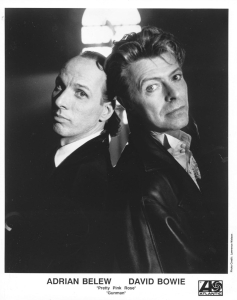
But the one I’ll always remember most is actually the very first moment we met. I was playing with Frank Zappa in Germany at the time, and during a break I noticed David Bowie standing near the monitor desk with Iggy Pop. I walked over and simply said: “I just want to thank you for everything you’ve done. I love your music.”
And Bowie immediately replied: “Great. How would you like to be in my band?”
That story is completely true, word for word. It was surreal meeting someone you admire that deeply and hearing something like that within the first minute of speaking to him.
King Crimson’s 1970s era is often seen as its most iconic period. Even before I knew the band itself, songs like Epitaph felt like part of the soundtrack to my childhood memories. In your view, what was the defining difference between the King Crimson of the 1970s and the 1980s?
First of all, I was a huge fan of the 1970s King Crimson long before I ever joined the band. I was a struggling musician at the time, and many nights I would sit with headphones on listening to those records just to stay inspired. That music genuinely helped me through difficult years. I never, ever tried to play it because it was really beyond me at the time.
What struck me most was the majesty of it all — the poetic, very flowery and very British language of Peter Sinfield’s lyrics, but also the contrast within the music itself. King Crimson could move from something ferocious like 21st Century Schizoid Man directly into something beautifully melodic like I Talk to the Wind, which almost feels like a Beatles song in the way it’s written and harmonized. That fascinated me because it made the band impossible to categorize.
The main difference is obviously we didn’t go in that direction at all in the 1980s version of the band. In fact, at first we weren’t even thinking about King Crimson at all. It began as something entirely new. But eventually Robert said the group had “the spirit of King Crimson,” and I immediately said: “Then let’s call it King Crimson.” That meant a great deal to me.
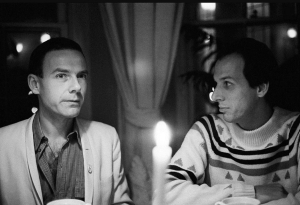
(Belew & Fripp)
At that time, New York was the center of American music and the city was full of new musical ideas — African-inspired rhythms, experimental songwriting approaches, the influence of artists like Talking Heads and Brian Eno. Robert had been living in New York and was part of that scene, and both of us had worked with Eno by then. So naturally, that energy found its way into the music.
And once Tony Levin started playing the Chapman Stick, it felt like there were suddenly no limits to what we could do. Bill Bruford could play virtually any rhythmic idea imaginable. I remember Robert once saying after a few early concerts in Europe and United States, that he believed we were the best live band in the world at that moment. That really made me have to stop and think because I had come from being a guy in Kentucky playing cover songs and never touching an odd time signature in my life, to being a guy who was the frontman of the best live bands in the world. It was an extraordinary trip there.
Of course, it’s the 80s and all the vibe and the sound of the era got infused in your music. The 1980s sound of King Crimson also feels deeply tied to that era’s textures and atmosphere which makes it distinctive from the 70s sound, isn’t it?
Absolutely. You had four musicians with fresh relationships, new technologies at their fingertips and completely new ideas. Looking back, I don’t think any of us realized while making Discipline that we were creating something people would later view as a landmark record.
“We were simply following our instincts and making the music we wanted to hear.” — Adrian Belew
We were simply following our instincts and making the music we wanted to hear. That’s always been my philosophy. To me, that is the way that music should be. I’ve never cared about charts or trends. For me, music begins with curiosity: I have an idea, and I want to hear what it sounds like. If I don’t create it myself, maybe nobody else will.
If you don’t enjoy what you’re creating, there’s no point in making music at all. And I’ve always felt that you brought a certain playfulness into King Crimson, balancing Robert Fripp’s more serious presence. The famous King Crimson barbershop piece is a perfect example — humorous, but also strangely revealing. Were those lyrics yours?
No, that was entirely Tony Levin. He recorded it himself as a joke for the band. In his younger days he had actually sung in a barbershop quartet, so he wrote all the words and performed all the voices himself.
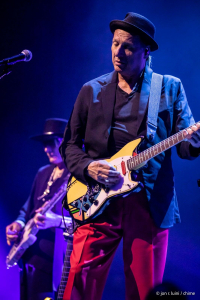
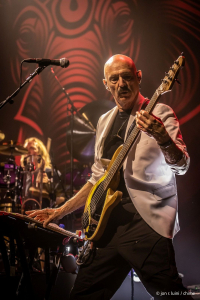 (Tony Levin with BEAT)
But I do think Tony and I — the two Americans in the band — naturally brought a certain sense of playfulness into King Crimson. It’s deeply rooted in my personality, and honestly I could never hide it even if I tried. And Tony is one of the funniest storytellers you could ever meet. He has an incredibly quick wit.
Meanwhile, Robert and Bill would often sit in the corner analyzing everything very seriously. So there was definitely a contrast there.
And honestly, I think that same spirit still exists in BEAT today. Now it is fully an American band and we treat the music with enormous respect, but I think we also made it our own and there’s also a sense of joy and almost an American swing to it. The original band could sometimes feel very rigid and precise, whereas this version has a little bit of sway to it and a little bit of smile.
You’ve previously mentioned classical influences such as Stravinsky and Gershwin in your music. And King Crimson itself has often drawn from classical inspiration — even pieces like The Devil’s Triangle, inspired by Holst, ended up influencing generations of metal musicians as well such as Geezer Butler of Black Sabbath. When it comes to Stravinsky and Gershwin, do you feel their impact more through harmonic language and rhythmic complexity, or through structure and texture?
For me, it’s mainly the compositional side of it — the harmony, the rhythmic ideas and the overall architecture of the music.
For example, in the middle section of Dinosaur, I wrote a passage specifically for three musicians to play together. Robert didn’t want to participate in that particular trio, so it ended up being me, Tony Levin and Trey Gunn. And that section was a direct reference to Stravinsky’s The Rite of Spring.
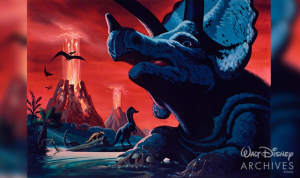 That influence has always been very important to me. Film music was also a huge part of my musical upbringing. When I was young, I spent a lot of time at the cinema, and through film scores I was exposed to incredible orchestral writing and composition.
Even something like Disney’s Fantasia introduced me to The Rite of Spring at a very early age. So by the time I was probably eight years old, that music was already shaping the way I heard sound and composition.
Stravinsky’s music also carries a very strong jazz sensibility. In a recent interview, another progressive rock musician described progressive music as “a small world.” And looking at later King Crimson lineups — Gavin Harrison from Porcupine Tree, Steven Wilson remixing the King Crimson catalogue, his collaborations with Opeth, even your own contribution alongside Mikael Åkerfeldt on Porcupine Tree’s Deadwing — there seems to be this fascinating interconnected universe between progressive rock and metal. From your perspective, how connected does that world feel, and where do you place yourself within it?
That’s a good and interesting question because I’ve never really thought of myself in narrow musical categories. I don’t necessarily see my own music as progressive rock, or metal, or any one specific thing.
I’ve made 28 solo albums, and on many of them I played almost every instrument myself. In some ways, those records probably represent my musical identity more directly than anything else. And honestly, a lot of my influences go back even further — to the music of the 1960s and the sounds I grew up with.
At the same time, being part of King Crimson absolutely opened a doorway into the world of progressive rock, and even into certain areas of heavy metal music. A lot of that connection probably comes through Robert Fripp. In my opinion, King Crimson essentially created progressive rock, so Robert was there right from the beginning of that movement.
These days I perform regularly on the Cruise to the Edge (Progressive Rock Cruise) , which was originally started by YES and brings together more than twenty progressive rock bands every year. And when you spend time there, just like you said, you really do realize how small that world is. You run into musicians from Dream Theater, Tool and countless other bands, and over the years I’ve become friends with many of them. So yes, I suppose I’m considered part of that family but personally, I’ve always tried to avoid defining myself too narrowly within progressive rock.
“At the end of the day, I think of myself first as a songwriter.” — Adrian Belew
At the end of the day, I think of myself first as a songwriter. And sometimes progressive musicians focus less on songs themselves and more on the technical side of playing. I’ve always felt like I exist somewhere between those two worlds. That’s probably why it’s difficult for me to define exactly who I am musically because I like everything I do. I’ve made solo records where I played nearly every instrument, I’ve worked on film projects with Pixar, have done a symphony with the orchestra, collaborated with artists from completely different worlds… I never really wanted to stay in one lane.
So I don’t feel like I have a fixed style. I wouldn’t compare myself to David Bowie, but I probably share some of that same instinct — the desire to keep moving forward and constantly create something new.
I want to combine my next two questions into one. You’re very active on social media, and I wonder whether platforms like these have brought artists and audiences closer together — or whether they’ve also diminished some of the mystery musicians once carried. And at the same time, what are your thoughts on artificial intelligence in music today?
I think social media has been enormously helpful because it allows artists to connect directly with their audience and let people see what they’re actually doing. So yes, maybe some of the mystique is gone — although some artists still manage to preserve that — but for the most part you’re baring your soul to your audience.
That’s something I personally enjoy. I like talking to my fans, answering questions and sharing what I’m thinking about. That’s just the kind of person I am. Someone like Robert Fripp probably wouldn’t enjoy that kind of interaction as much as I do, but for me it feels natural. I think it helps people better understand both the artist and the music itself.
As for AI, I honestly still don’t know exactly what to think yet. It feels too early to fully understand where it’s going. I don’t think it will affect my own music very much because I enjoy playing and creating everything myself. But technically, it could certainly become useful — maybe in recording, editing or making certain processes faster and easier.
At the same time, I’ve never really considered myself part of the mainstream music industry anyway. Years ago I accepted that I probably wasn’t going to make hit records or become part of that machine, and I genuinely don’t care about that. My goal has always been much simpler: to stay creative.
I still believe there will always be a human factor in music, even if AI becomes a useful tool for musicians.
That’s actually a much better way of putting it than what I just said.
I completely agree — there has to be a human factor, otherwise people will eventually grow tired of it. But I also think AI will absolutely be beneficial in many areas beyond music. Look at medicine, surgery, technology… it’s going to help humanity in extraordinary ways. It is a good thing, it is not a bad thing.
I understand why people are afraid of it, though. Anything unknown tends to make people uneasy.
For young musicians starting out today, standing out in such a massive musical landscape feels more difficult than ever. What advice would you give to someone beginning their journey in rock music today?
“Be true to yourself. Don’t chase trends.”
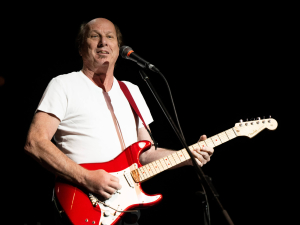
The only advice I’ve ever really been able to give is: be true to yourself.
Don’t chase trends, and don’t let other people tell you what your music is supposed to sound like. The most important thing is expressing yourself honestly and not allowing anything to interrupt that process.
And yes, it may take a very long time to get somewhere with it. But that’s not really the point anyway. The journey itself is the important part.
To be honest, I think this is a very difficult time to be a new artist. I don’t say that to discourage anyone — it’s simply reality. Some people will break through and some won’t. All you can really do is keep moving forward, do your best, and never stop creating. Never give up.
At the same time, I still think originality is possible today. Artists like Angine de Poitrine or Tame Impala, for example, prove that there’s still room for truly distinctive voices even in a technology and AI-driven world.
Absolutely. In fact, originality is exactly what makes people stand out.
And social media has changed that dramatically. You have an audience there that can see what you’re doing. When I was young, if you were some strange, crazy and experimental kid making unusual music, nobody would ever hear or know it unless someone like Frank Zappa happened to discover you.
Today, that’s no longer the case. You already have your own platform. You can create whatever you want, put it online, and reach people directly. In many ways, young artists now have more opportunity than ever before. (you have just as good a chance as anyone)
Do you see BEAT eventually evolving into a band that creates original material of its own?
Honestly, I can’t really see that happening yet — at least not right now. At the moment, our goal is simply to travel the world and play this music for as many people as possible.
Even that has been difficult because everyone in the band is constantly busy with other projects. Just getting all of us into the same place at the same time is a challenge. So I think once we fully accomplish this first mission, we’ll eventually sit down and ask ourselves: What do we want to do next? Can this continue? Or will everyone move on to completely different directions again?
I hope it happens someday, because I truly love this band. I love playing with these musicians. Honestly, there isn’t a better band in the world for me right now.
And finally, if you had to describe the spirit of BEAT in just one word, what would it be?
Adventurous.
We all share that same adventurous spirit. We always want to keep moving forward, exploring and discovering what comes next.
And with that, Adrian Belew says goodbye, glances toward another waiting Zoom call, and prepares to leave — but not before sharing one final message for Istanbul:
“I can’t wait to come back and say hello. I’m really excited to be there.”
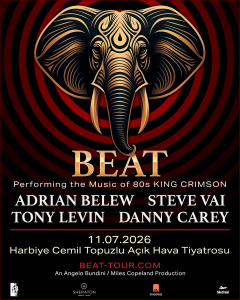
(Live event promotion by StagePass Live)
More than four decades after Discipline changed the language of progressive music, Adrian Belew still speaks about sound with the excitement of someone discovering it for the first time.
Perhaps that is the real spirit of BEAT — not nostalgia, but curiosity. The desire to move forward, experiment fearlessly and continue searching for sounds that do not yet exist.
And as our conversation comes to an end, Belew leaves with one final word to describe the band he now shares with Steve Vai, Tony Levin and Danny Carey:
“Adventurous.”
Interview by Güzin Paksoylu
BEAT photos courtesy of Jon R Luini.
All rights reserved. Quotations without reference is forbidden.